Work

Things I’ve built, and still look after.

Every project here is live and maintained by me. They’re my own products, which means I’ve lived with every decision in them — the traffic spikes, the search rankings, the payments and the support emails. Your project gets the same care.

01 — Exam revision platform

Live

PaperMunch

Every past paper, munched.

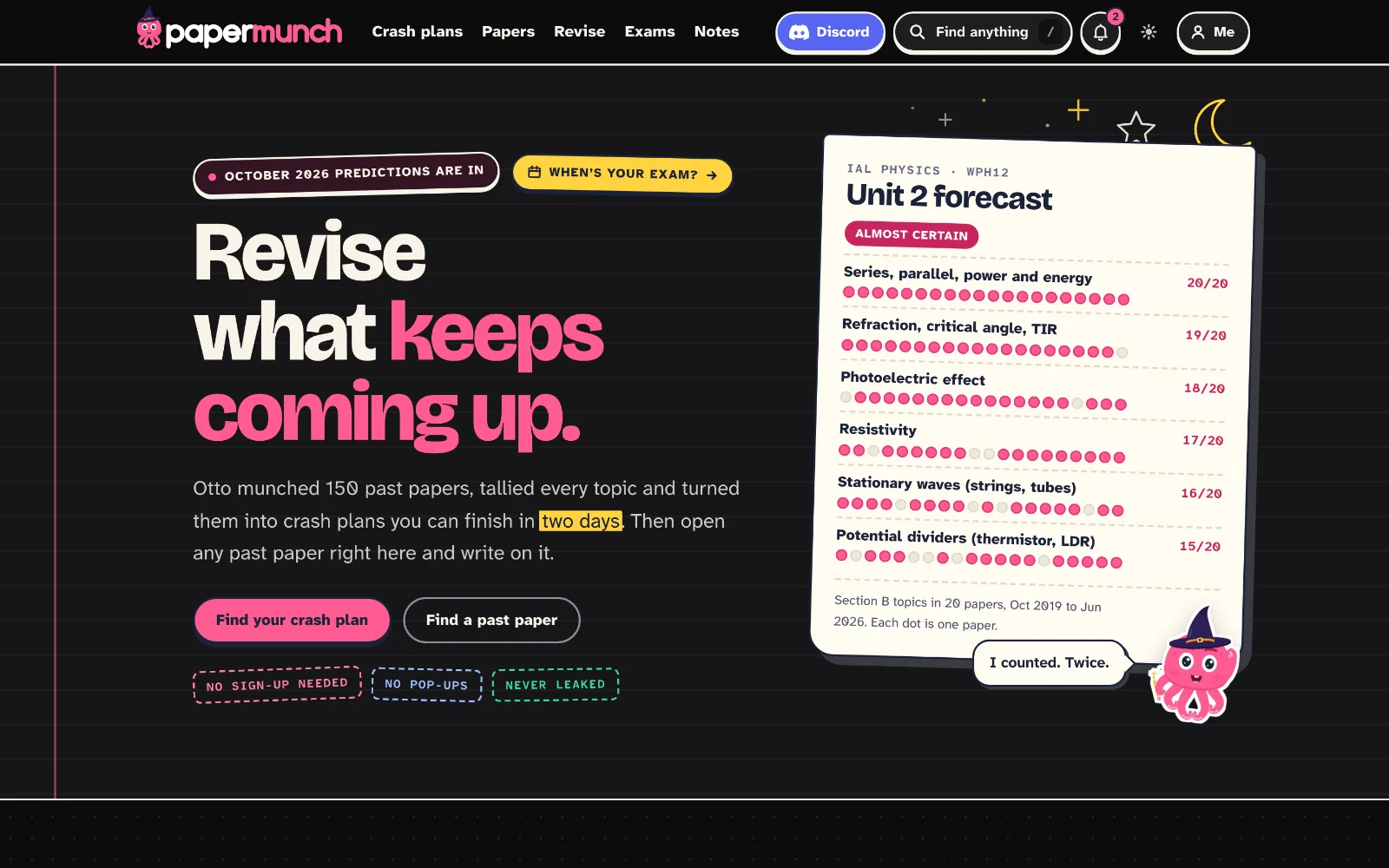
The PaperMunch homepage: the headline “Revise what keeps coming up” beside a Unit 2 physics forecast that shows how often each topic appeared across 20 past papers.
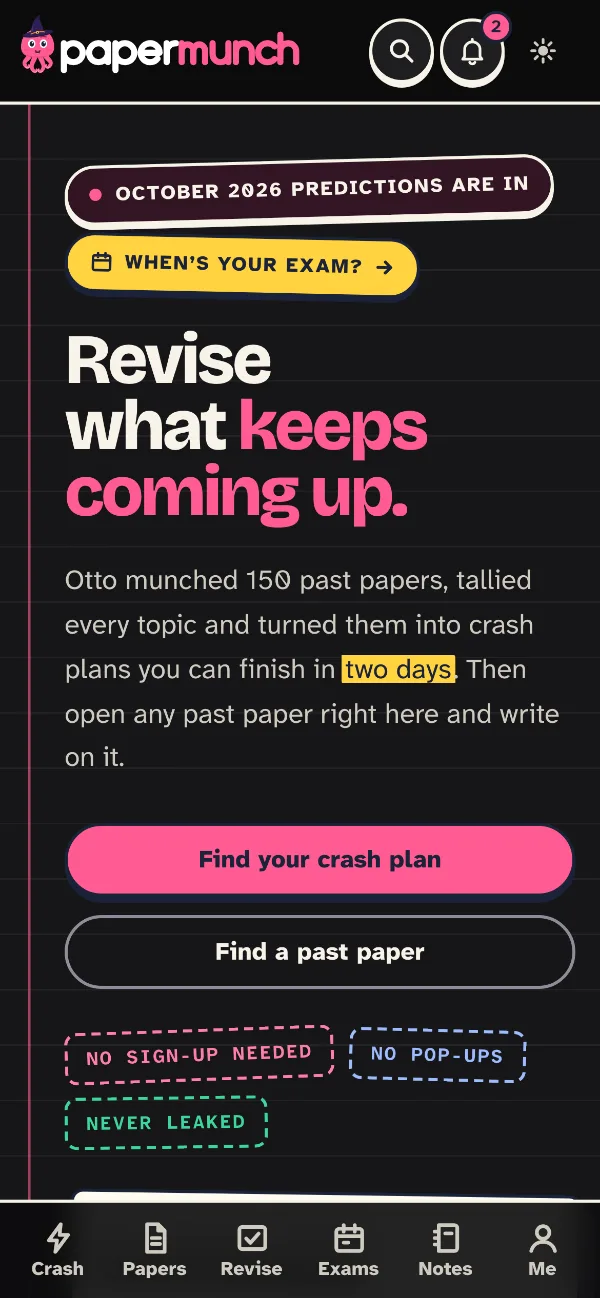
PaperMunch on a phone, with buttons to find a crash plan or a past paper.

The idea

Revising for IGCSE and A Level exams usually means hunting for past papers across slow, ad-stuffed sites, printing them, then hunting again for the mark scheme. PaperMunch puts every paper in one fast place — free, with no sign-up and no pop-ups — and then goes a step further: it tells students what to revise first.

What I built

  • A library of 35,000+ papers. Cambridge and Edexcel, IGCSE and A Level, question papers and mark schemes back to 2001 — searchable by subject, by topic, or by the code printed on the paper.
  • The desk. Papers open right in the browser, ready to write on with a stylus: palm rejection, a mark scheme that stays face down until you’re ready, and a timer that stops itself when you finish. Notes are saved on the student’s own device.
  • Crash plans and forecasts. Each one comes from tallying the topics in 18–20 past papers, so students revise what actually keeps coming up — in two days, if that’s all they’ve got.
  • Everything around it. 4,000+ quick questions with explained answers, exam countdowns, notes and flashcards, and a community Discord — all fronted by Otto, the octopus who keeps it friendly.

What’s underneath

A static-first site built with Astro and served from Cloudflare’s network, so pages stay quick on a phone over school Wi-Fi. Structured data helps search engines understand every subject and paper — because students find revision material through search, at the exact moment they need it.
02 — Live data & news site

Live

ESC Predictions

A fan guide, built like a data product.

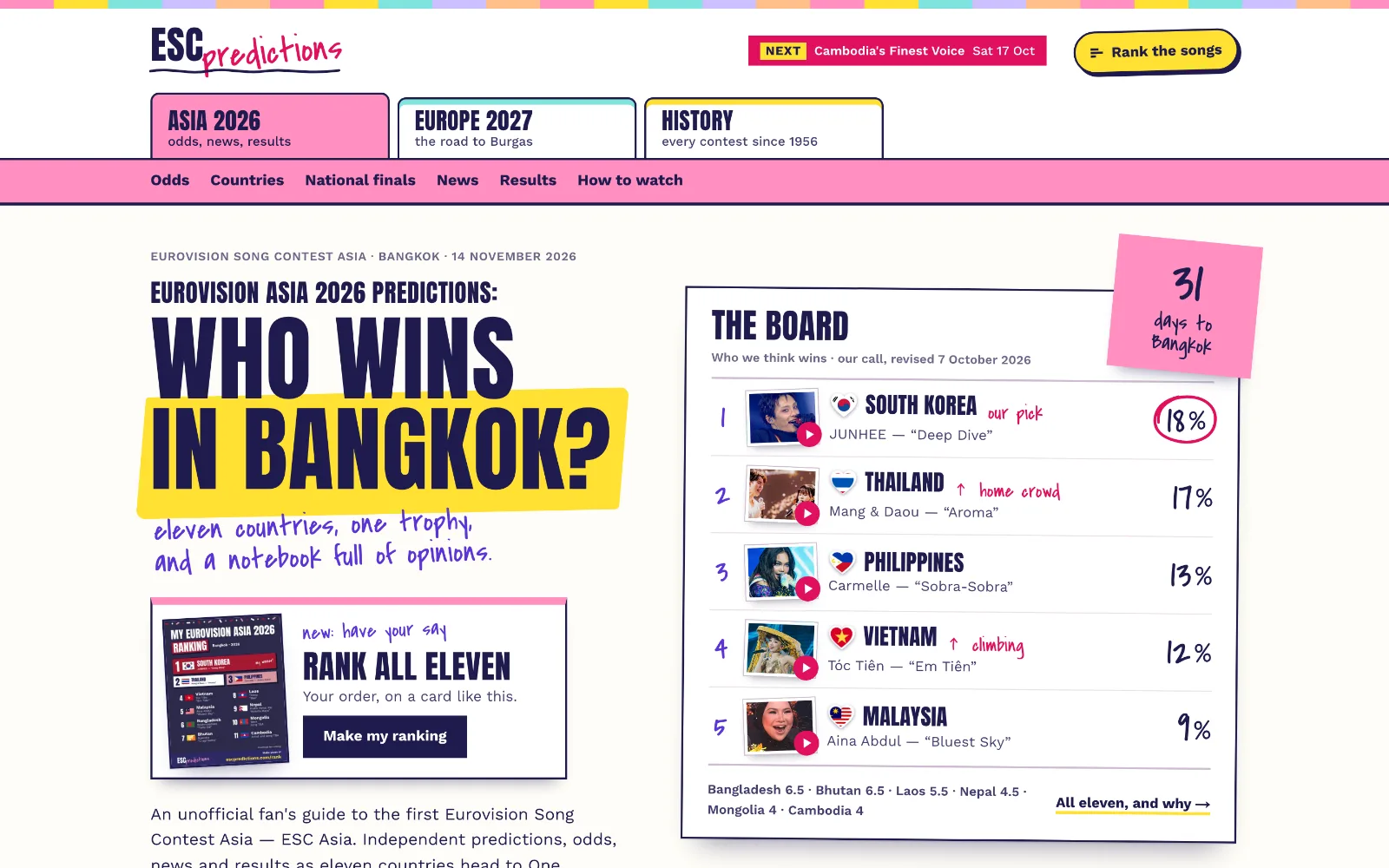
The ESC Predictions homepage: “Who wins in Bangkok?” next to a predictions board ranking South Korea, Thailand, the Philippines, Vietnam and Malaysia by win chance.
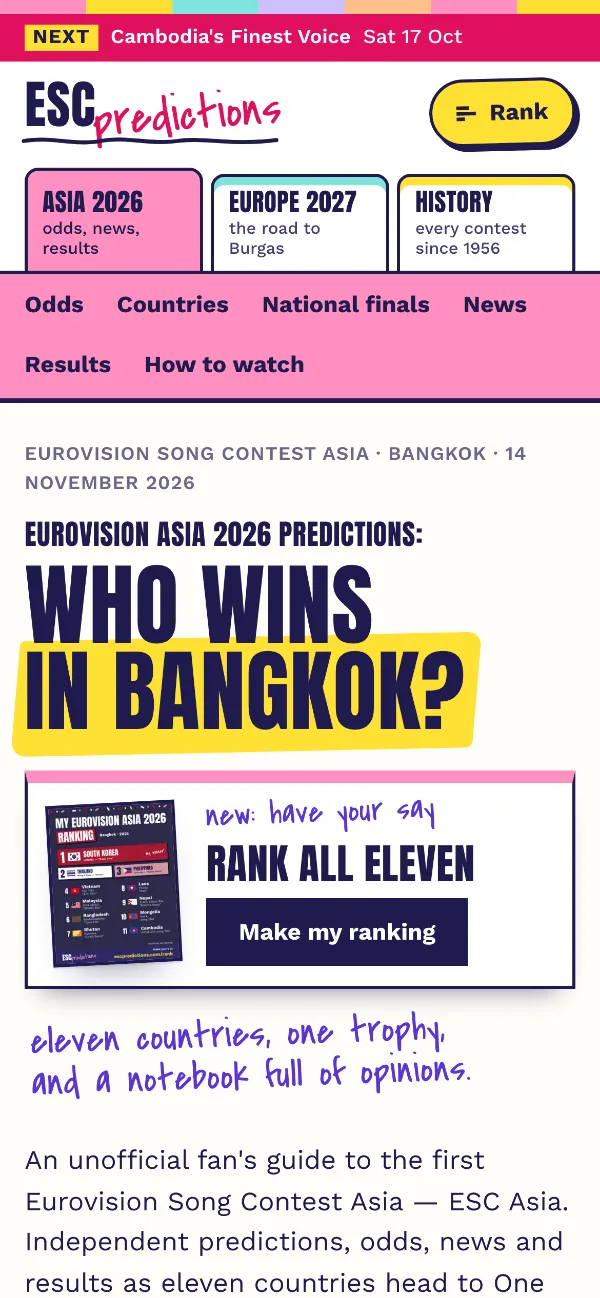
ESC Predictions on a phone, with tabs for Asia 2026, Europe 2027 and history.

The idea

Eurovision Asia — the first Eurovision Song Contest held in Asia — takes place in Bangkok on 14 November 2026, with eleven countries competing. Fans needed one place to follow the road there: who’s been picked, how the odds are moving, and when every national final airs. ESC Predictions set out to be that place, and grew into a history of the whole contest.

What I built

  • A live predictions board. Win estimates for all eleven entries, with trend indicators, revised as each national final lands.
  • A page for every country and selection. Each competing country and national final gets its own page — results where it has aired, a full preview where it hasn’t.
  • Rank all eleven. Fans put the songs in their own order and get a ranking card to share.
  • Seventy years of Eurovision. An archive of every contest since 1956: 1,700+ artists, 52 countries, and all the records and scandals in between.
  • News that stays current. Fact-checks, a how-to-watch guide and the run-in to Bangkok, kept up to date through the season.

What’s underneath

The site was built SEO-first, from a $0 budget, to compete in search with fan sites that have been around for years. Static pages built with Astro and served from Cloudflare stay quick when show nights bring traffic spikes, and structured data helps search engines understand every country, artist and contest.

03 — Chrome extension

Launching Nov 2026

Sortle

Your AI chats, sorted.

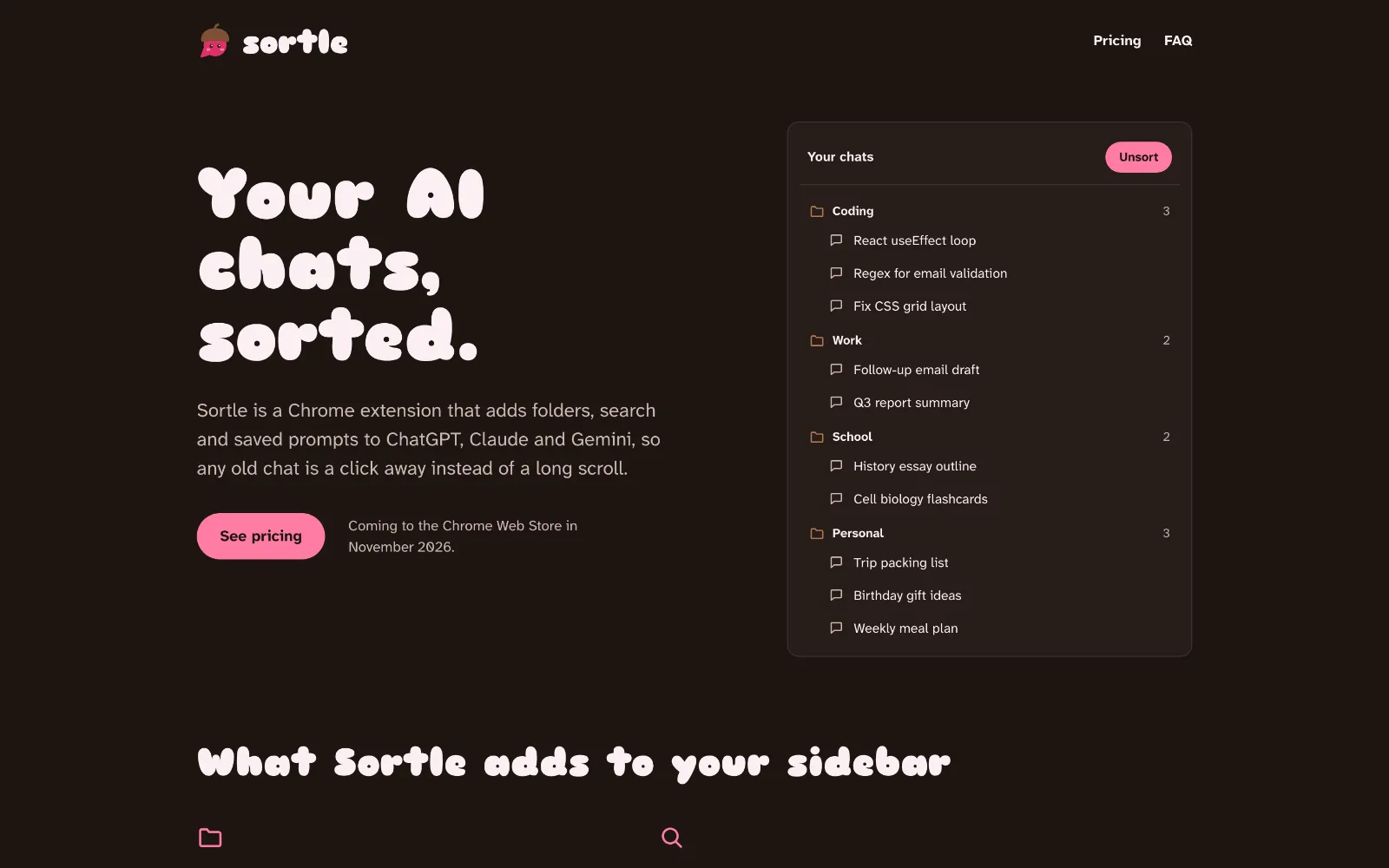
The Sortle homepage: “Your AI chats, sorted.” beside a chat sidebar sorted into Coding, Work, School and Personal folders.
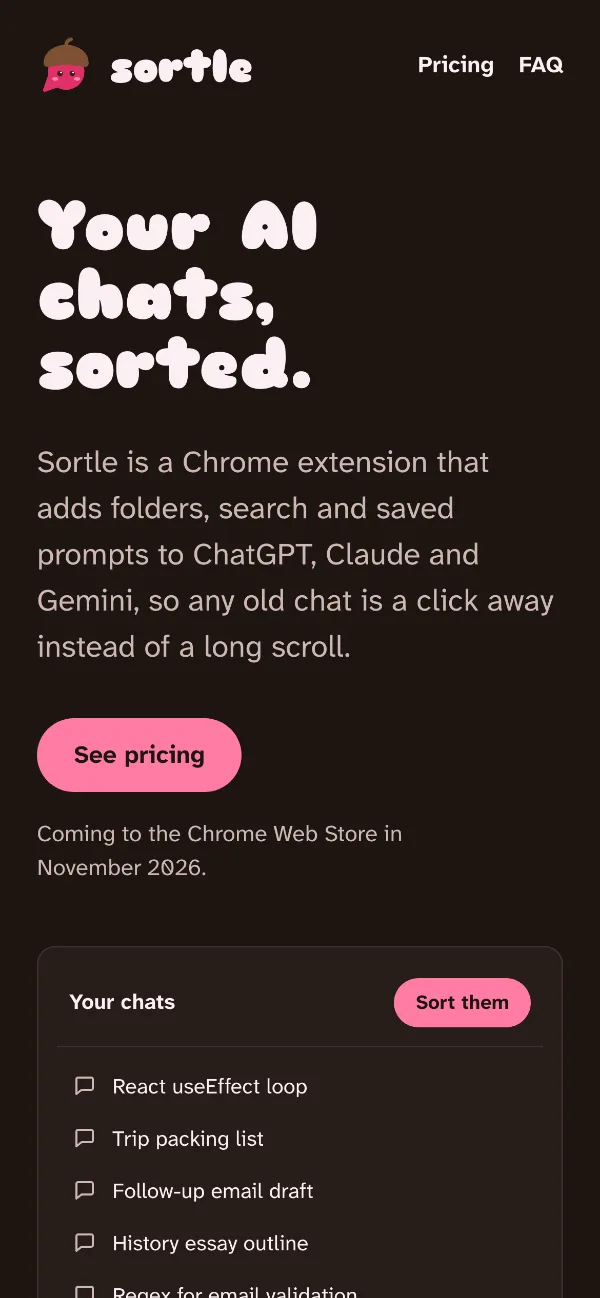
The Sortle landing page on a phone.

The idea

Anyone who uses ChatGPT, Claude or Gemini every day knows the problem: hundreds of chats in one long list, and the one you need is always buried. Sortle adds the organisation those sidebars are missing — without asking anyone to trust a new server with their conversations.

What I built

  • Folders and pins, right in the sidebar. Drag any chat into a folder like Coding, School or Work, and pin the ones you’re working on — inside the sidebar people already use on chatgpt.com, claude.ai and gemini.google.com.
  • Search and saved prompts. Find chats by title from day one, and drop a saved prompt into any chat with one click. Full search inside every chat arrives as a free update in December.
  • A fair way to pay. A free tier, and a one-time Pro upgrade sold through Paddle as merchant of record — so tax, invoices and refunds are handled properly from the first sale.
  • The launch site. The landing page, pricing, FAQ, privacy policy, terms and refund policy.

What’s underneath

Privacy by design. Folders, pins and prompts are stored in Chrome on the user’s own computer; there are no servers that see anyone’s chats, and no account to create. The only thing Sortle ever sends is a buyer’s email address, to confirm their purchase.

Your project next?

Want something built with the same care?

Tell me what you’re working on. If it’s a good fit, we’ll book a call and plan it properly — if not, I’ll point you somewhere useful.